

AI visibility for financial services: fees, eligibility and trust
How banks, card issuers and insurers appear in AI answers, why finance sets a higher bar for evidence, and the fee and trust questions that decide a shortlist.
Last updated by Vouch
The problem
Questions that once went to comparison sites now go to assistants as well: which current account suits a freelancer, which card for travelling abroad, which insurer for a first car. ChatGPT, Gemini, Perplexity and Google's AI features answer with named providers and reasons, and the follow-ups decide who stays in the running.
Finance raises the bar for evidence. Google's guidance on helpful, reliable content calls topics that could significantly affect people's health, financial stability or safety "Your Money or Your Life" topics, and says its systems give even more weight there to content with strong experience, expertise, authoritativeness and trust. Promotional copy alone carries little weight; specific, attributable facts carry a lot.
Nothing on this page is financial advice. It is about whether your products are described accurately when people ask.
Where financial brands drop out
Fees and total cost
"What does it actually cost?" Monthly fees, foreign transaction charges, excesses, early repayment charges: the assistant can only quote what it can find. Publish complete, dated fee information as text on the product page, not only in a downloadable document, and keep it the same wherever the product appears.
Eligibility and exclusions
"Can I get it?" follows. Minimum deposits, credit requirements, waiting periods and exclusions decide real applications. State the key eligibility rules and exclusions in plain language on the product page, alongside the full terms.
Regulation and protection
"Is it regulated?" and "is my money protected?" come at the Trust stage. Publish your regulatory status with the exact register entries, link to the official register (in the UK, for example, the FCA's Financial Services Register), and explain any deposit protection or ombudsman route that applies.
The independent record
At the end, assistants summarise what independent sources say: reviews, complaints, press coverage. You cannot write that part, but you can make the official facts easy to check and answer criticism on your own pages.
What to fix first
- Run a category conversation in two assistants, follow up on fees, eligibility and trust, and note where your products drop out. The 30-minute AI visibility audit gives you the steps.
- Check that AI search crawlers can read your product and fee pages with the free AI crawler checker.
- If fees are the gap, start with fee transparency. It is usually the quickest change.
- Put eligibility, key exclusions and regulatory details on product pages as text.
- Review after every product or fee change, and agree every change with your compliance team, since product pages may fall under the financial promotion rules where you operate.
How Vouch helps
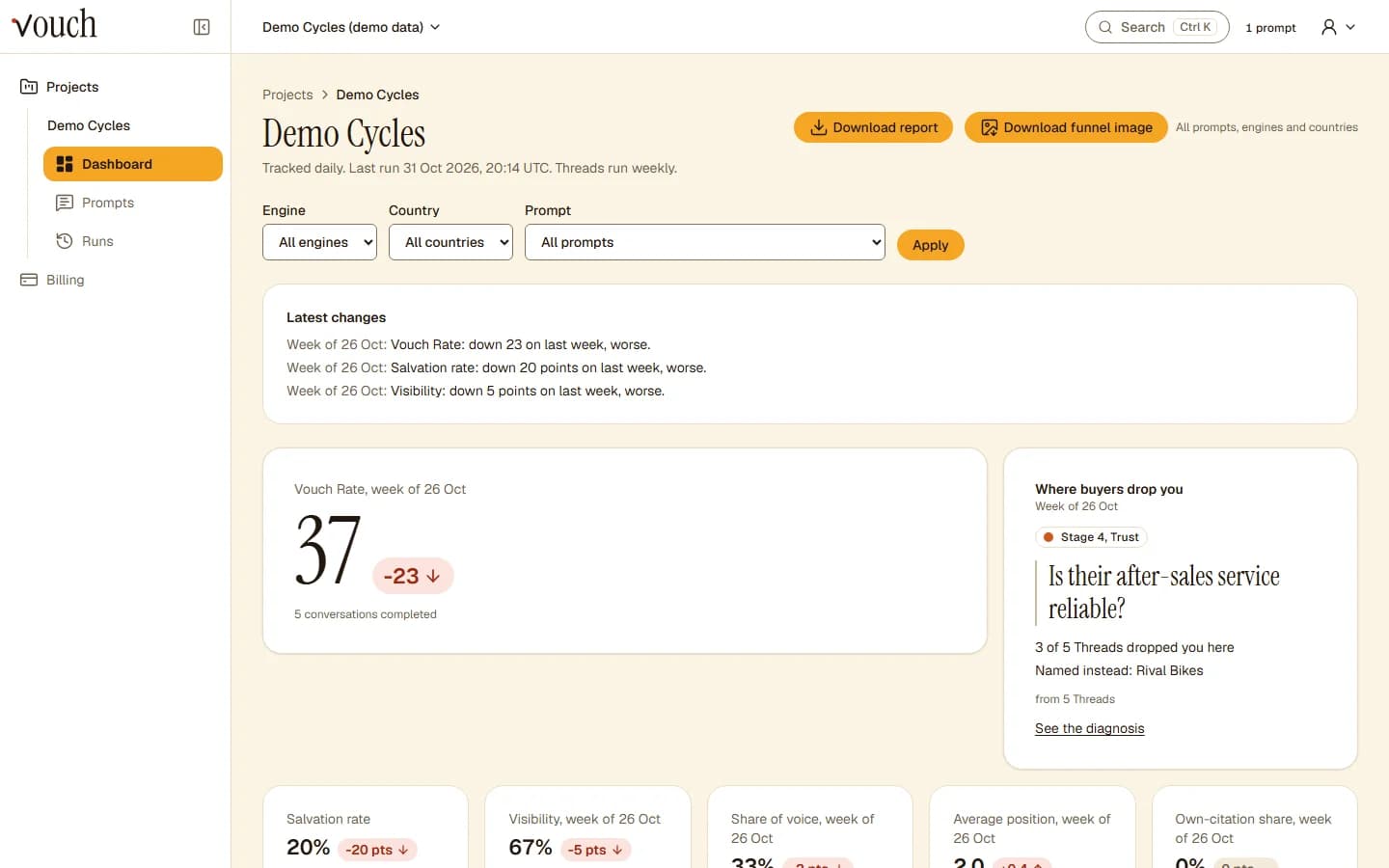
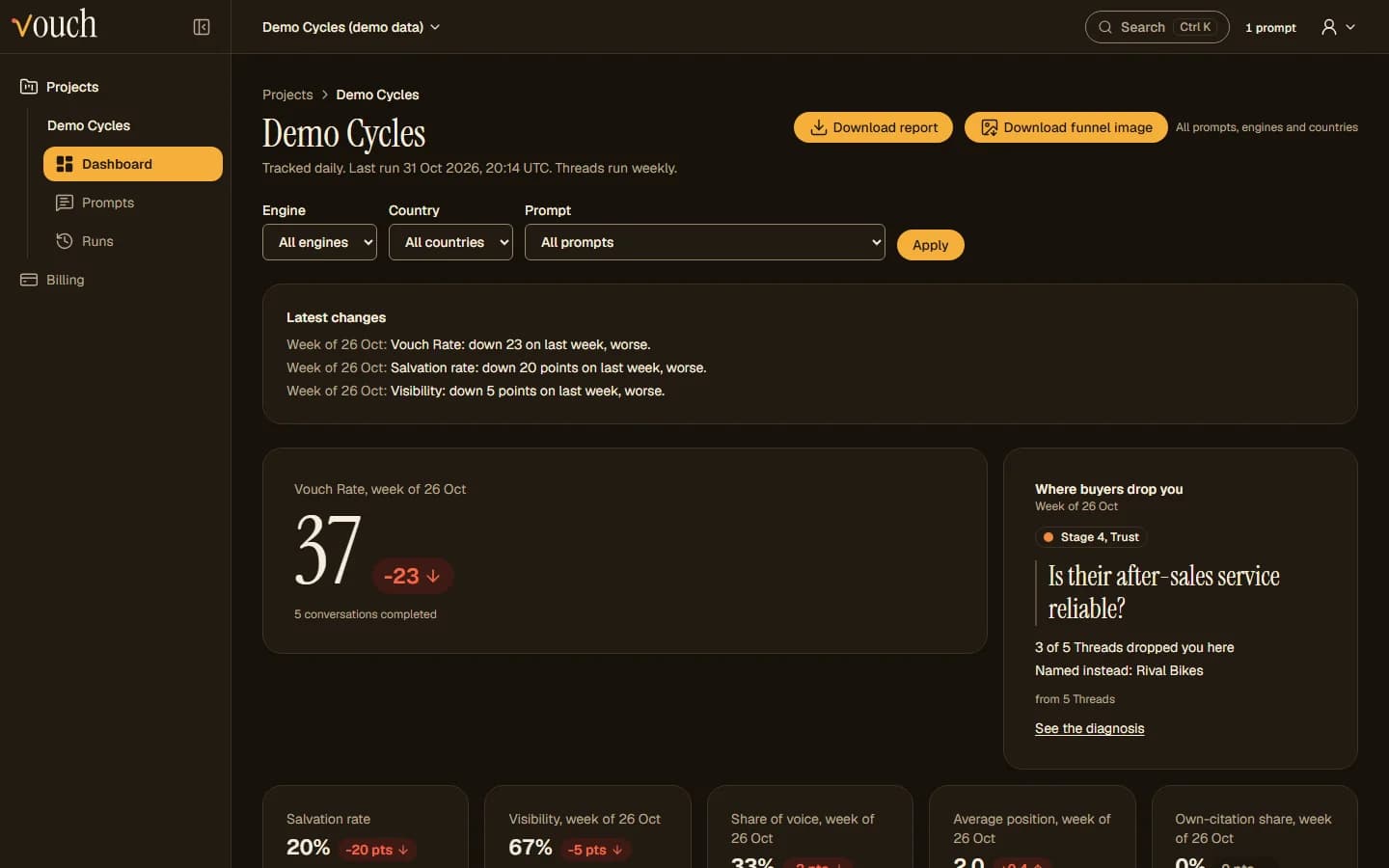
Vouch tracks your prompts every day across seven AI assistants and runs six-question buying conversations, Threads, on ChatGPT, Claude, Gemini and Perplexity three times a week. For a bank, lender or insurer, a Thread shows the stage where a product stops being named, such as doubts about fees and fine print at Objection, regulation and service at Trust or cost against rivals at Value, which provider is recommended instead, and which sources the assistant cited at that moment. Vouch then suggests what to publish for that stage. The weekly Vouch Rate tracks the result over time, and the methodology explains how it is scored.
Common questions
Do people ask AI assistants which bank account or card to choose?
Some do, much as they once used comparison sites: they describe their situation, ask for options, then follow up on fees, eligibility and whether the provider can be trusted. How common this is varies by market and product.
Why do sources matter more for financial answers?
Money is a high-stakes topic. Google says that for topics that could significantly affect people's financial stability, its systems give more weight to content showing strong experience, expertise, authoritativeness and trust. Specific official pages and recognised independent coverage are easier to rely on than promotional copy.
Is this page financial advice?
No. It is about how financial brands are described in AI answers, not about which products anyone should choose. The aim is for your products to be described accurately, not to turn an assistant into an adviser.
What most often knocks a financial brand out of an AI shortlist?
In our experience, costs the assistant cannot state. When it cannot say what a product costs, a rival whose fees are published plainly is easier to describe.