

AI visibility for health and wellness brands: evidence over claims
How AI assistants answer questions about wellness products, why verifiable sources matter more in health, and what supplement and skincare brands can fix first.
Last updated by Vouch
The problem
People now put wellness questions to AI assistants: which magnesium supplement, which moisturiser for sensitive skin, which sleep tracker. ChatGPT, Gemini, Perplexity and Google's AI features answer with named products, then field the follow-ups: what is in it, is there any evidence, is it safe, what does it cost.
Health raises the bar for evidence. Google's guidance on helpful, reliable content says that for topics that could significantly affect people's health, financial stability or safety, its systems give even more weight to content with strong experience, expertise, authoritativeness and trust. Vague benefit claims give an assistant little to stand on.
Nothing on this page is medical advice, and none of it suggests making claims your regulator does not permit.
Where wellness brands drop out
Ingredients and composition
"What is actually in it?" comes early for supplements, skincare and devices alike. Publish the full composition or specification as text on every product page, matching the packaging exactly.
Evidence
"Does it work?" The assistant summarises whatever credible material it can find. Describe the research behind a product accurately and without exaggeration, link to it, and say plainly what has not been shown. Stay within the claims your market allows: for food supplements sold in the EU, for example, health claims must be on the European Commission's authorised list.
Safety and suitability
"Is it safe with my medication?" or "is it suitable in pregnancy?" are questions for a pharmacist or doctor, and a responsible page says so. What you can publish is the factual layer: allergens, known interactions and warnings from your labelling, testing and certifications with dates, and a clear line on who should seek advice before use.
Price and availability
At the end the assistant states what the product costs and where to buy it. A clear price and stock status on your own site keeps you in; hidden pricing points the assistant towards a retailer or a rival it can quote.
Where to begin
- Run a category conversation in two assistants, follow up on ingredients, evidence and safety, and note where your products drop out. The 30-minute AI visibility audit sets out the steps.
- Publish the safety and allergen information from your labelling as text.
- Replace adjectives with facts on your top product pages: composition, certifications, the evidence and its limits, price. The product page checklist covers the rest.
- Check that AI search crawlers can reach those pages with the free AI crawler checker.
- Review after every formulation change, and run claims past whoever signs off your labelling.
How Vouch helps
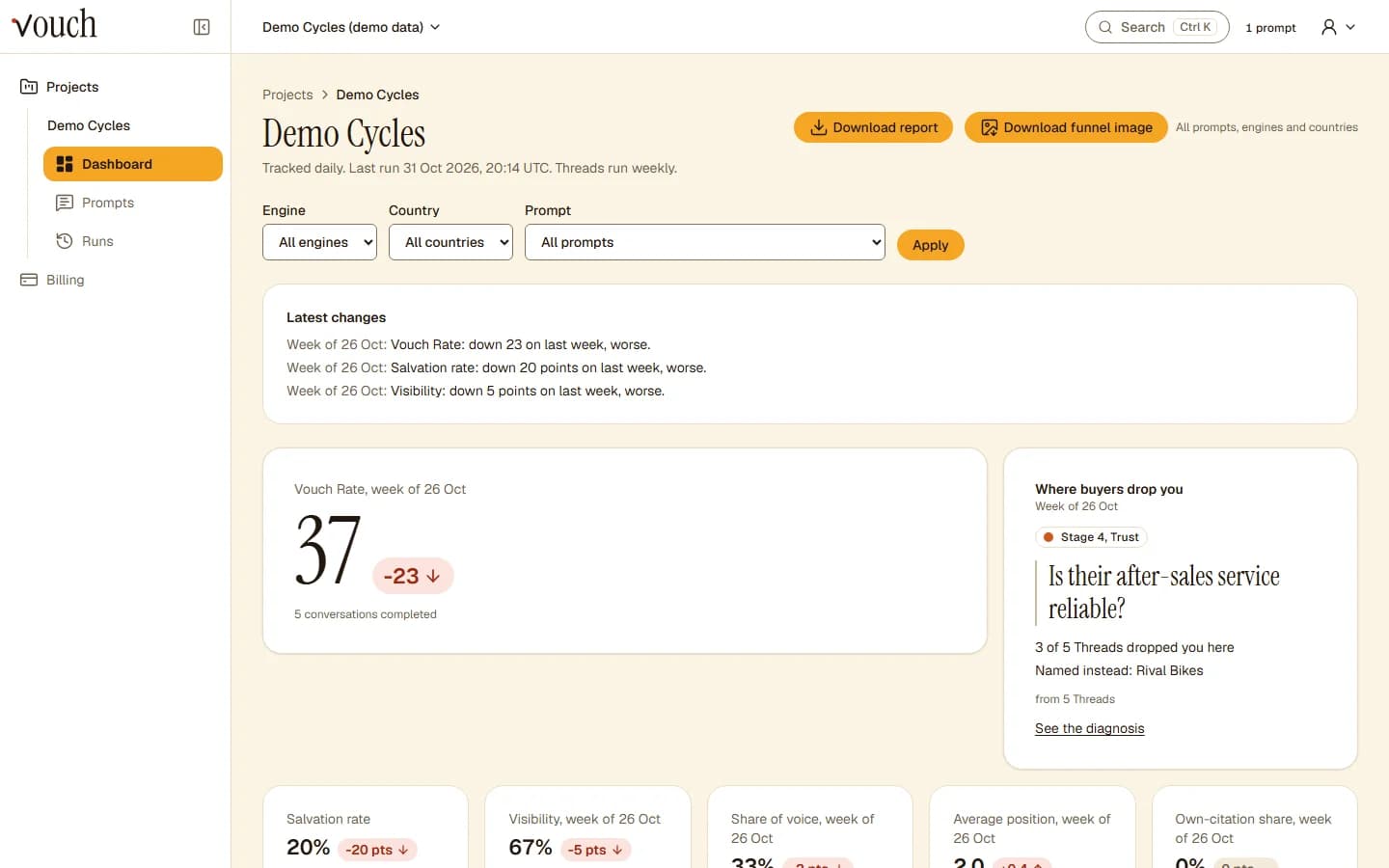
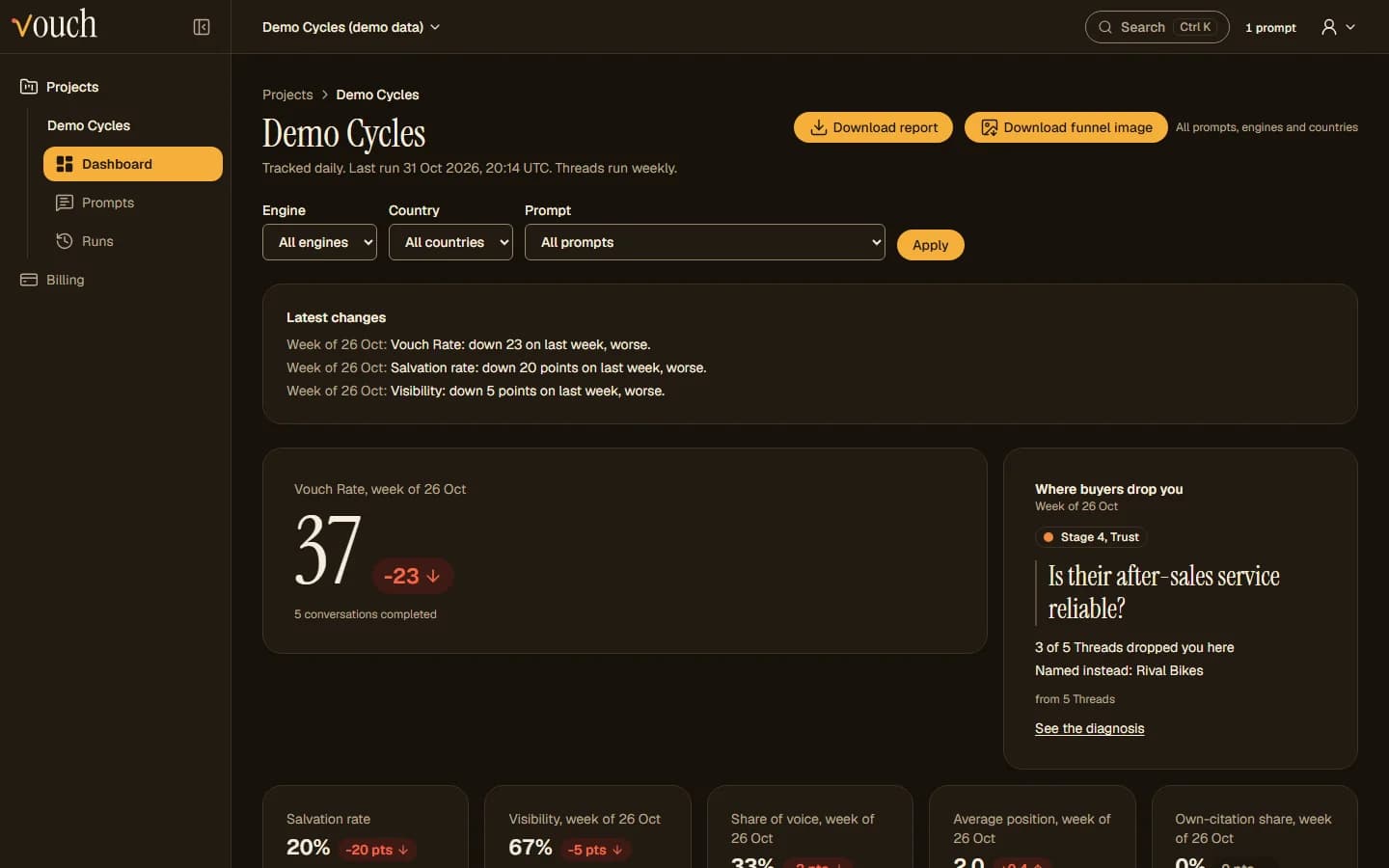
A wellness brand gets two views in Vouch: daily answers to its tracked prompts across seven AI assistants, and Threads, six-question buying conversations that run on ChatGPT, Claude, Gemini and Perplexity three times a week. Each Thread shows the stage where a product stops being named, whether on doubts about the evidence at Objection, safety and reviews at Trust or price at Value, which brand is named instead, and the sources the assistant leaned on at that point. Vouch then suggests what to publish for that stage, and the weekly Vouch Rate shows whether it worked. The methodology explains how answers are collected.
Common questions
Do consumers ask AI assistants about health and wellness products?
Some do. They describe a goal, such as better sleep or sensitive skin, ask what to consider, then follow up on ingredients, evidence, safety and price before buying.
Why do sources matter more for health topics?
Google says that for topics that could significantly affect people's health or safety, its systems give more weight to content showing strong experience, expertise, authoritativeness and trust. Verifiable product facts and recognised independent sources hold up better than marketing claims.
Can a wellness brand improve how it appears in AI answers without making medical claims?
Yes. Complete ingredient lists, certifications, honest descriptions of the evidence, clear prices and real customer reviews can all help, and none of them needs a claim your regulator does not allow.
Is this page medical advice?
No. It is about how brands are described in AI answers. It says nothing about whether any product is suitable or safe for anyone, which is a question for a qualified professional.