

AI visibility for consumer electronics: win the spec-by-spec comparison
How AI assistants compare electronics spec by spec, why a missing number hands the sale to a rival, and what headphone, phone and gadget brands should fix.
Last updated by Vouch
The problem
Electronics buyers compare relentlessly, and an assistant makes it easy. A shopper asks for the best noise-cancelling headphones under 250 pounds, gets three names with reasons, then keeps going: which has the longest battery, which supports multipoint, is the new model worth the extra over last year's. Each of those answers is built one specification at a time from what the assistant can find.
When a figure is on a rival's page and missing from yours, the comparison tips without anyone deciding it should. The assistant states their number and hedges on yours.
Where electronics brands get replaced
Missing specifications
"Does it support LDAC?" The assistant answers confidently for the rival and vaguely for you. Publish complete specification tables as HTML text on every product page, including the dull details: codecs, wireless standards, dimensions, weight, what is in the box.
Compatibility
"Will it work with my phone, my console, my car?" Compatibility scattered across support forums is hard to quote. A compatibility section on the product page, naming model families and software versions you have tested, answers it directly.
Review consensus
At the trust stage the assistant summarises what reviewers and owners agree on. OpenAI says ChatGPT's shopping review summaries come from reviews on public websites. A product with a clear professional and owner review record gives it something to say. Where reviewers found a real weakness, publish the fix or the clarification, such as a firmware update, on your own site.
Model and price confusion
Near-identical model numbers and regional variants confuse people and machines alike. If an assistant cannot tell your models apart, or finds three prices, it may switch to a product it can describe cleanly. Keep naming consistent, and keep the page, your product markup and your retail listings in step on price.
What to fix first
- Ask an assistant to compare your lead product with its two closest rivals, follow up on the specifications buyers care about, and log every vague or wrong answer.
- Fill those gaps as text on the product page. The product page checklist covers specifications, markup and crawler access.
- Add compatibility and in-the-box sections.
- Check that AI search crawlers can reach your product pages with the free AI crawler checker.
- Repeat after every launch and every feature added by a firmware update.
How Vouch helps
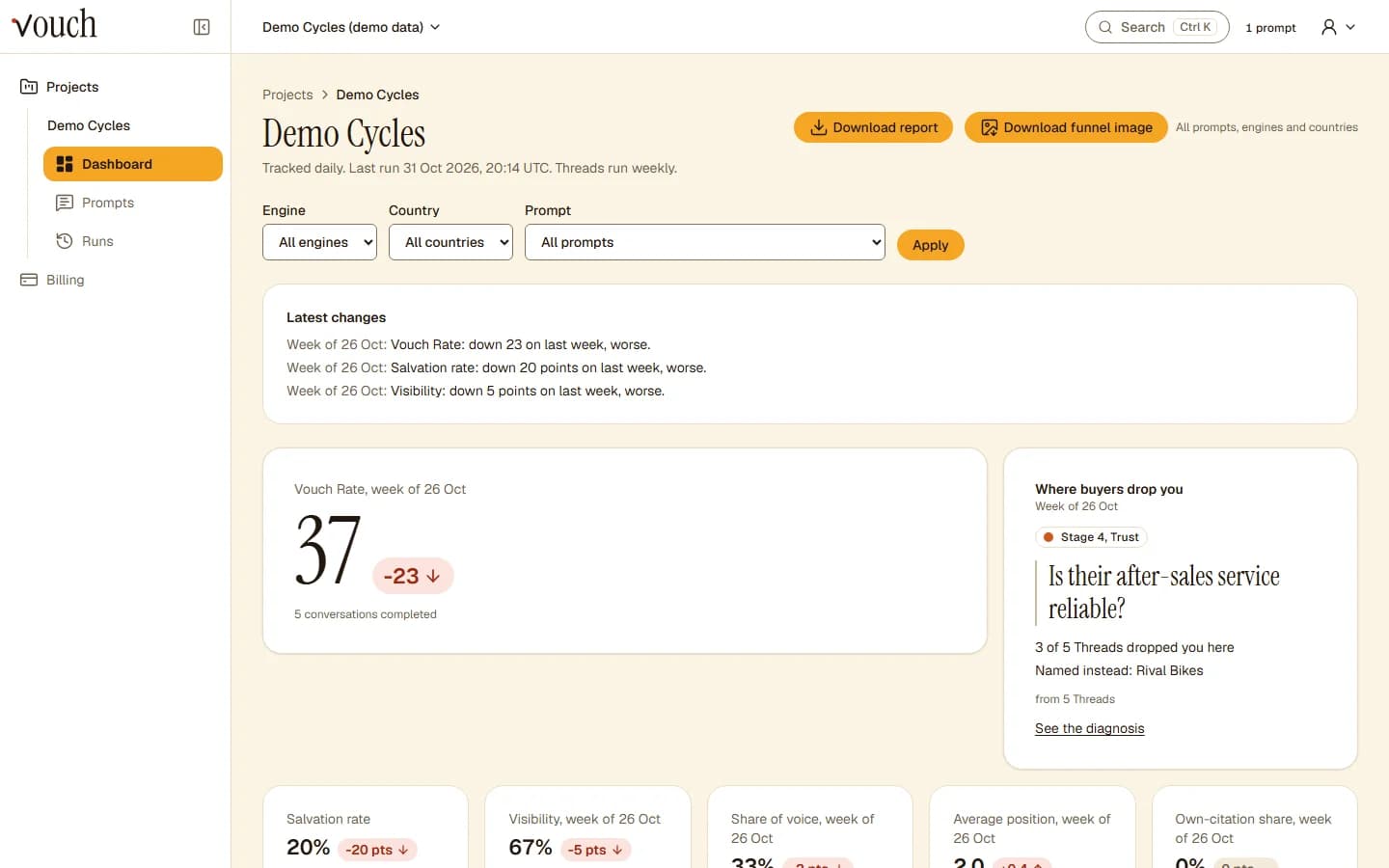
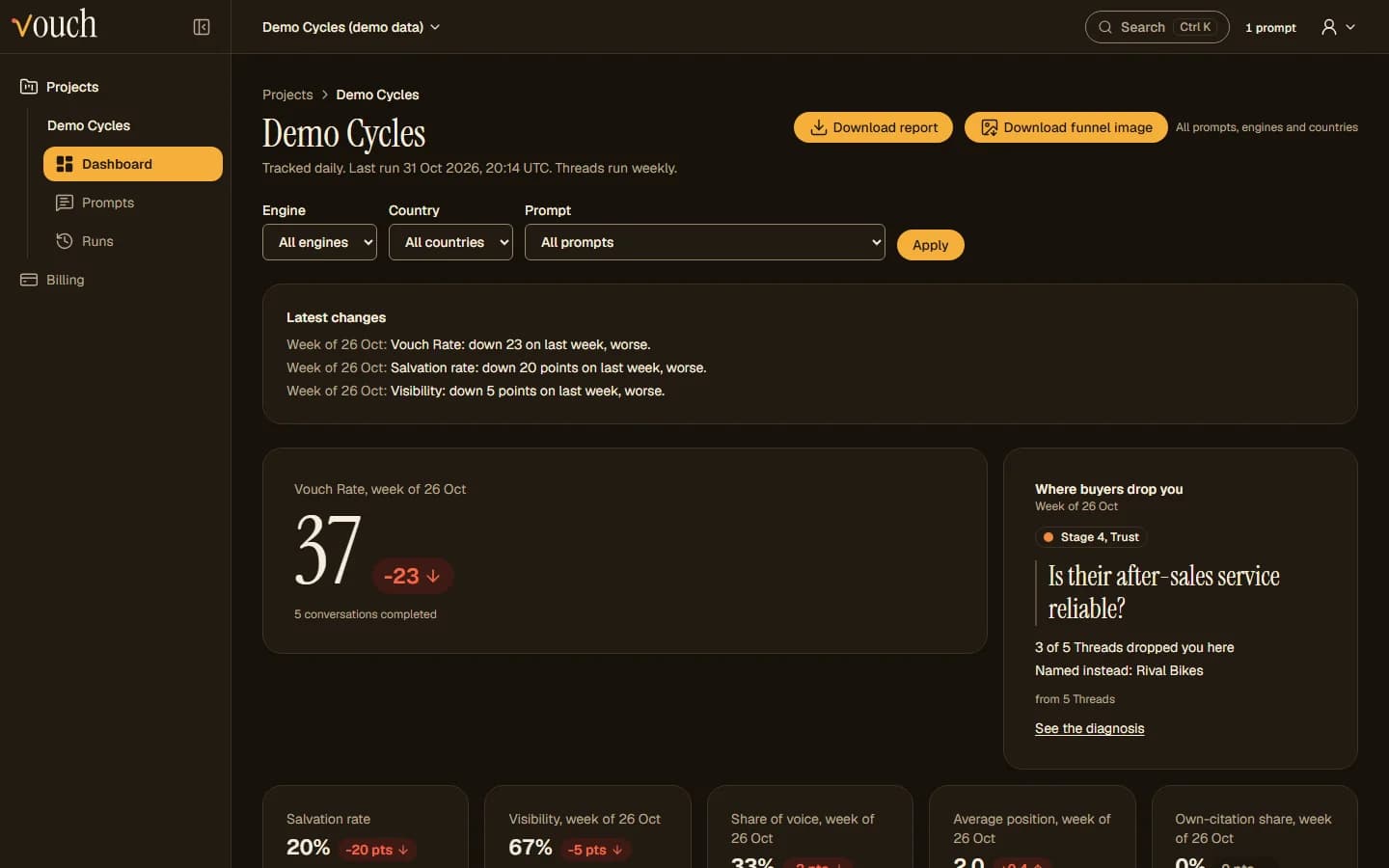
Vouch checks your prompts daily in seven AI assistants and runs six-question Threads on ChatGPT, Claude, Gemini and Perplexity three times a week. An electronics Thread typically runs from "best headphones under 250 pounds" through the comparison, the known downsides, reliability and warranty, and value, to "which should I buy, and where?". Vouch records the step where your product drops out, the rival recommended instead and the reviews and articles cited at that point, and suggests what to publish. The weekly Vouch Rate shows whether a new spec table or a firmware note changed the outcome; the methodology explains the scoring.
Common questions
How do shoppers use AI assistants to buy electronics?
Many describe what they need and a budget, get a shortlist with reasons, then compare the options on specifications, compatibility and value before buying.
Why does an assistant switch from our product to a rival mid-conversation?
Often because a follow-up asked for something it could not confirm about your product, such as a codec, a battery figure or compatibility with a phone, while the rival's page stated it plainly.
Do specification pages matter for AI recommendations?
Yes. A comparison is built from facts the assistant can find. A spec sheet that exists only as a PDF or an image is harder to use than an HTML table on the product page.
Can Vouch track several product lines?
Yes. Each tracked prompt can be a different product line or price band, and each plan includes a set number of tracked prompts. The pricing page lists the limits for every plan.