

AI visibility for fashion brands: size, returns and fabric questions
How ChatGPT and Google AI Mode recommend clothing, and the fit, returns and fabric questions where D2C fashion brands lose the sale to a rival.
Last updated by Vouch
The problem
A shopper asks ChatGPT for "a black midi dress for a winter wedding under 150 pounds", or describes what she wants to Google's AI Mode, and gets named products with prices and reasons. The next questions are the ones fashion buyers always ask: does it run small, can I send it back, what is it made of. A brand that cannot be described at that moment loses the sale to one that can, inside an answer the brand never sees.
This page covers what is specific to clothing and accessories. For online shops in general, including marketplaces and service after the sale, see Vouch for ecommerce brands.
How AI shopping works for fashion, as of November 2026
ChatGPT. OpenAI's shopping help page says product results are chosen by ChatGPT, are not ads, and draw on structured metadata from merchants and third parties (such as price and description) and on third-party content such as reviews. Our guide to ChatGPT shopping covers product feeds and checkout.
Google AI Mode. Google announced in May 2025 that AI Mode shopping combines Gemini with its Shopping Graph, which it put at more than 50 billion product listings, and runs several searches at once to narrow the options. The same announcement started a virtual try-on experiment for shirts, trousers, skirts and dresses in Search Labs in the US. Your product data in Google's shopping systems is part of what AI Mode can show.
In both, the assistant matches a described need to products it can describe. Facts a crawler cannot read are facts it cannot repeat.
Where fashion brands lose the sale
Size and fit
"Does it run small?" and "is there a 14 in stock?" come early. Assistants answer from size guides, stock data and reviews. A size chart saved as an image, or sizes that only appear after a click, leave nothing to quote. Put fit notes and measurements on each product page as text, keep stock data current, and ask for reviews that mention fit.
Returns
"Can I send it back if it does not fit?" carries real weight in clothing. State the returns window, conditions, who pays for the return and how the refund is made, in plain words. Google's merchant listing guide supports a return policy in structured data and recommends one store-wide policy in your Organization markup.
Fabric and quality
"What is it made of, and will it last?" "Premium fabric" says nothing. Give the composition in percentages, the weight where it matters, and care instructions, and keep them the same everywhere the product is sold.
Price
Assistants quote prices. If the page, your product markup and your feeds disagree, or a sale price is unclear, the answer weakens. Keep them in step.
What to fix first
- Ask an assistant about your ten best sellers the way a customer would, including the fit and returns questions, and note what it gets wrong or cannot answer.
- Rewrite those product pages so every answer is on the page as text. The product page checklist goes item by item.
- Check that AI search crawlers can read your catalogue with the free AI crawler checker.
- Repeat after every range launch.
How Vouch helps
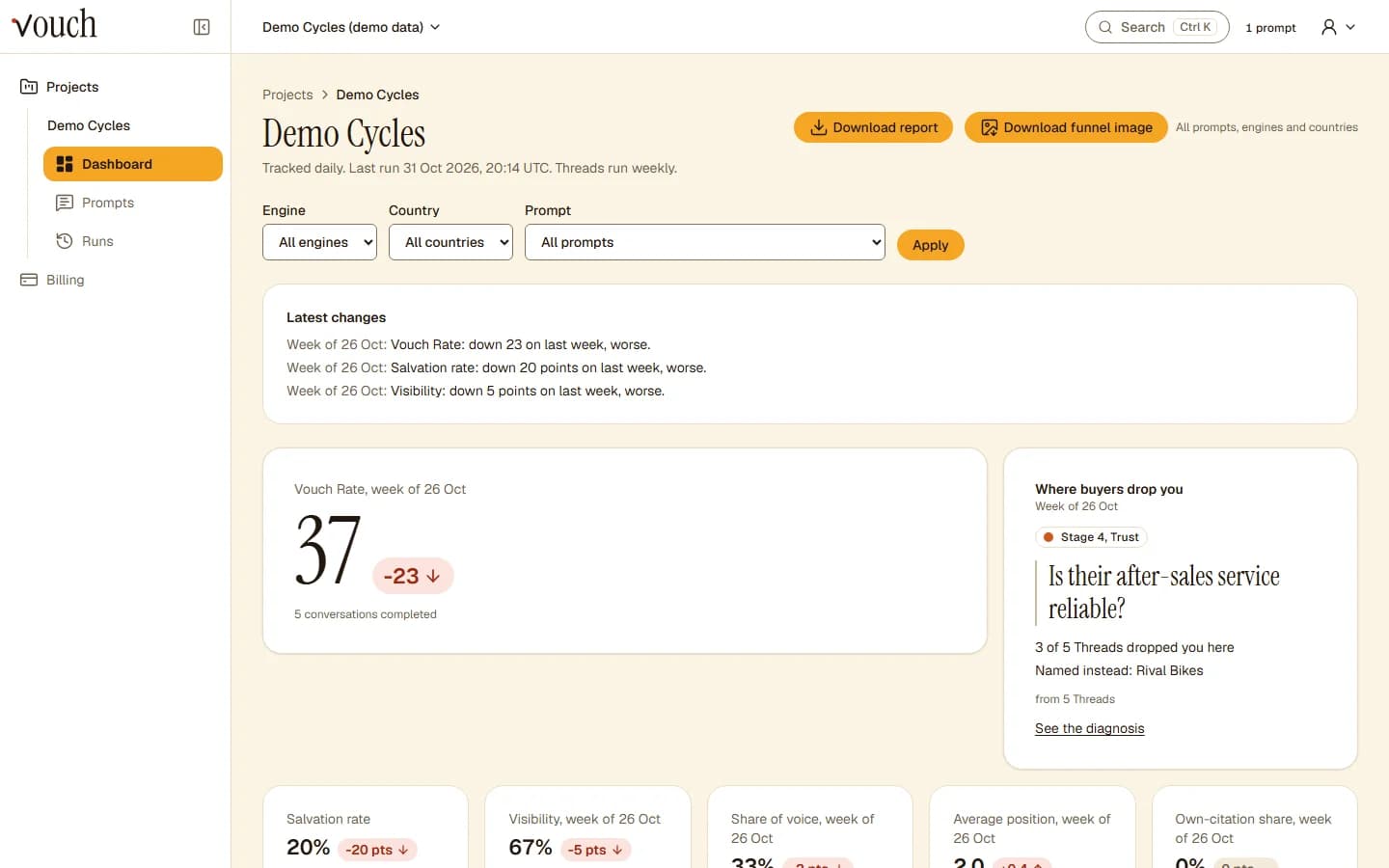
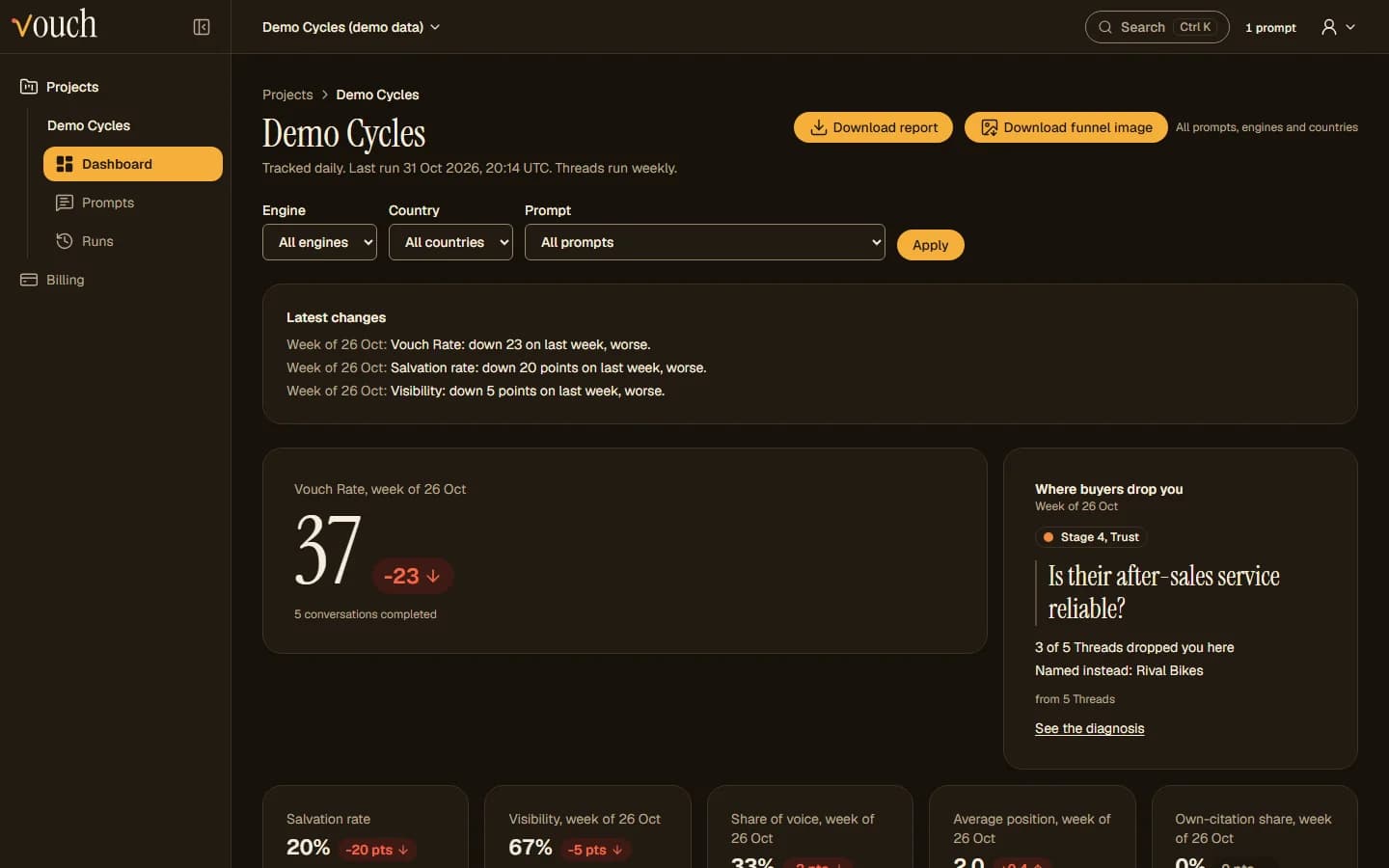
Vouch tracks your prompts daily across seven assistants, including Google AI Overviews and AI Mode, and runs six-question buying conversations, Threads, on ChatGPT, Claude, Gemini and Perplexity three times a week. For a fashion label that shows whether a product is lost at the Objection stage on fit, at Trust on returns or at Value on price, and which brand is recommended instead. Vouch then suggests what to publish for that stage, and the weekly Vouch Rate shows whether a rewritten size guide or returns page changed the outcome.
Common questions
How does ChatGPT decide which clothes to recommend?
OpenAI says ChatGPT's product results are chosen by ChatGPT and are not ads. They draw on structured metadata such as price and description, from merchants and third parties, and on other third-party content such as reviews. Clear, current product data and readable product pages give it more to work with.
Why do AI assistants recommend a rival's dress instead of ours?
Often because the rival's page answers the follow-ups and yours does not: fabric, fit, sizes in stock, returns. An assistant can only recommend with confidence what it can describe.
Do reviews affect AI product recommendations in fashion?
They can. OpenAI says ChatGPT's shopping review summaries come from reviews on public websites. Reviews that mention fit and fabric give an assistant specifics to repeat.
How is this page different from the one for ecommerce brands?
The ecommerce page covers any online shop. This one covers the questions specific to clothing and accessories: size and fit, returns, fabric and Google's AI Mode shopping features.