

AI visibility for SaaS companies: stay on the software shortlist
How software buyers shortlist tools in ChatGPT, Claude, Gemini and Perplexity, the pricing, integration and security questions that drop SaaS brands, and fixes.
Last updated by Vouch
The problem
A software shortlist can now start in a chat. A support lead types "we are a 40-person team and our shared inbox is breaking, what should we look at?" and gets five named tools with a reason for each. Then the questions get harder: which of these work with Salesforce, which start under 30 dollars a seat, which have SOC 2. By the time anyone books a demo, the assistant has already helped decide who is worth a call.
Most SaaS brands only check the first answer, if they check at all. The losses happen in the follow-ups, and they leave no trace in your analytics.
Where SaaS brands drop out
Pricing
"How much does it cost?" comes early. If pricing sits behind a sales form, the assistant may quote an old third-party article, say pricing is unclear, or move on to a rival whose price it can state. Publish real numbers or honest ranges, say what each tier includes, and date the page.
Integrations
"Does it work with HubSpot?" needs a direct, readable answer. A logo wall rendered as images gives a crawler little to read, and many AI crawlers do not run JavaScript at all. An integrations page with one plain-text row per tool, saying what each integration does and on which plans, answers the question outright.
Security and compliance
At the trust stage buyers ask about SOC 2, GDPR, data residency and subprocessors. A trust page that lists certifications with dates, names your subprocessors and says where data is stored gives the assistant something to cite. "Security is our top priority" gives it nothing.
Where to start
- Check that AI search crawlers can read your pricing, integrations and trust pages with the free AI crawler checker; should you block GPTBot? explains which agents matter.
- Run the buying conversation yourself in two assistants, past the first answer, and note where you drop out. The 30-minute AI visibility audit gives you the prompts.
- Close the cheapest gap: usually a dated pricing page or a plain-text integrations page.
- Publish or update your trust page with the documents behind it.
- Repeat every month. Answers shift as the sources behind them change.
How Vouch helps
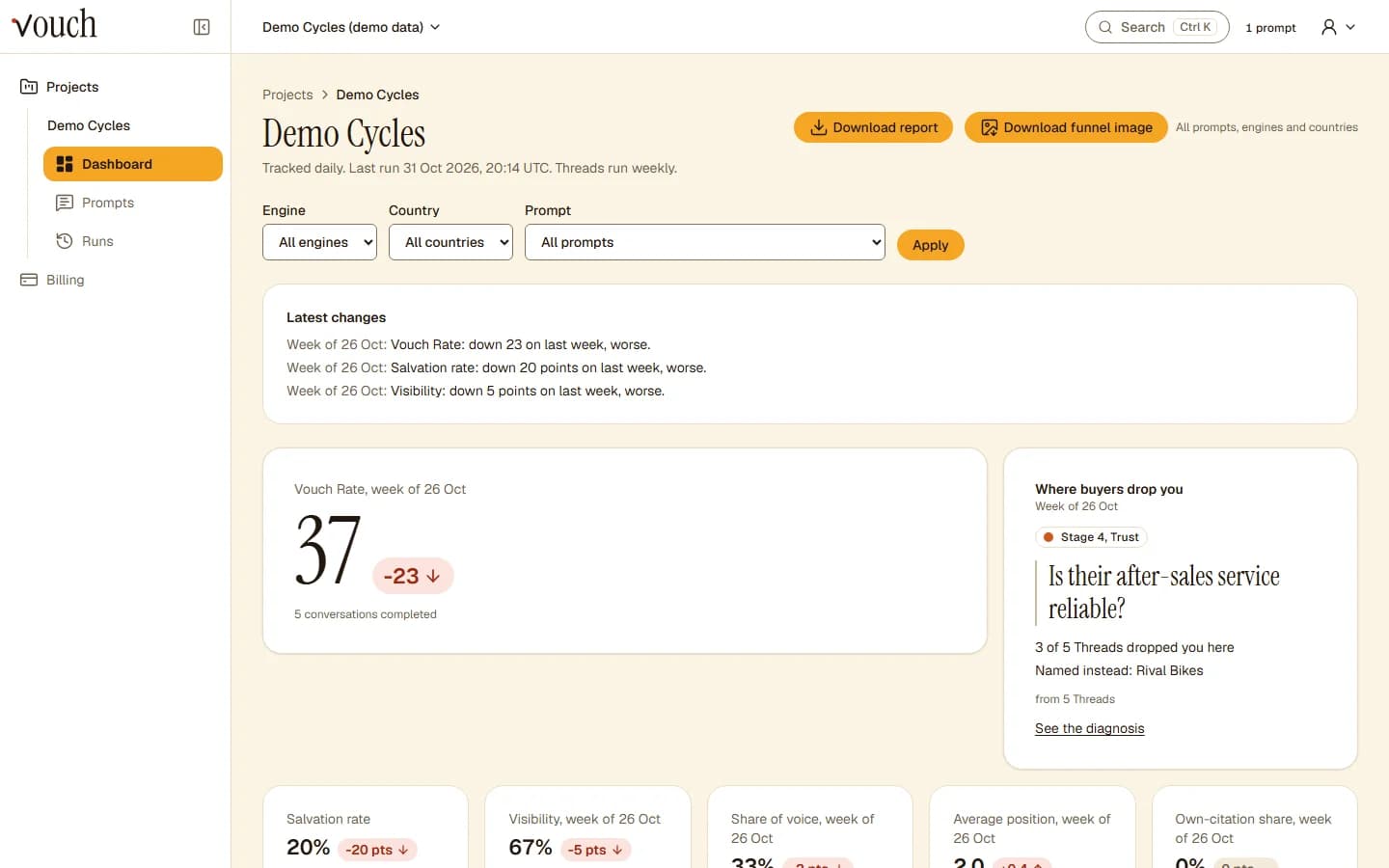
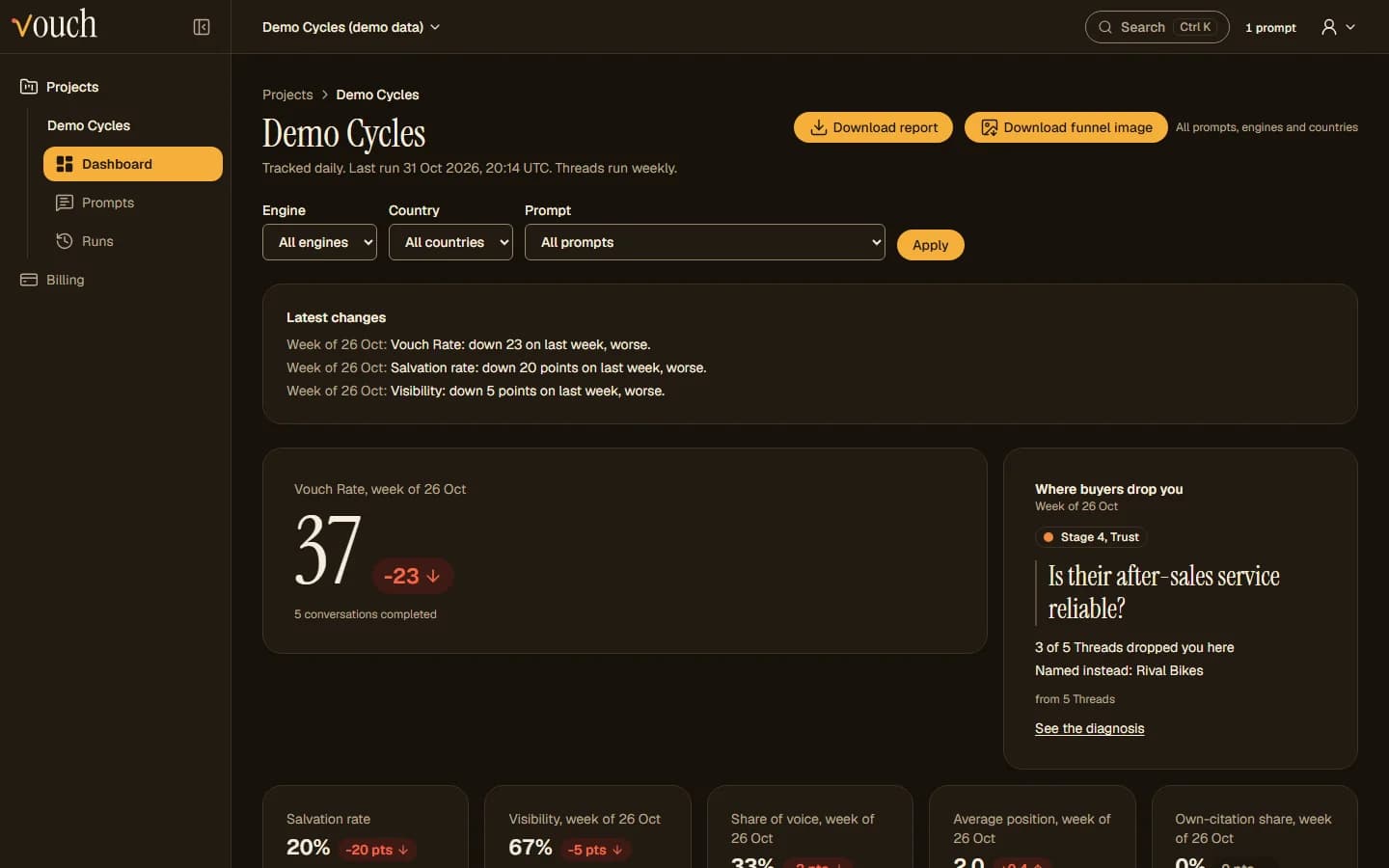
Vouch tracks your prompts every day across ChatGPT, Claude, Gemini, Perplexity, Google AI Overviews, Google AI Mode and Copilot. On top of that it runs Threads: six-question buying conversations on ChatGPT, Claude, Gemini and Perplexity, three times a week, from Discovery through Shortlist, Objection, Trust and Value to Decision. Vouch writes the five follow-ups for your category.
For a SaaS company that usually means seeing whether you survive the integration question at Shortlist, the security question at Trust and the price question at Value. Each Thread records the stage where you stop being named, the tool recommended instead and the sources cited at that point, then suggests what to publish. The weekly Vouch Rate, from 0 to 100, shows whether a new pricing or trust page moved the result; the methodology explains the formula.
Common questions
How do software buyers use AI assistants to choose tools?
Many describe their problem in plain language, ask for options, then question the shortlist on pricing, integrations and security before they visit a vendor's site. The questions after the first answer are where most SaaS brands are won or lost.
Why does my SaaS brand drop out of AI answers after the first question?
Usually because a follow-up asks for a fact the assistant cannot find about you: a price, an integration, a security certification. When it cannot state your answer, it tends to hedge or recommend a rival it can describe.
Does SEO still matter for SaaS in AI search?
Yes. Assistants that search the web draw on the same public pages, reviews and documentation that search engines index. AI visibility adds a second question: whether your brand survives the follow-ups, not just the first answer.
Which assistants does Vouch track?
Vouch tracks ChatGPT, Claude, Gemini, Perplexity, Google AI Overviews, Google AI Mode and Copilot. Threads, the six-question buying conversations, run on ChatGPT, Claude, Gemini and Perplexity.