

AI visibility for travel and hotels: from shortlist to booking
How AI assistants shortlist hotels and decide where travellers book, the total price and cancellation questions that matter, and what properties should fix.
Last updated by Vouch
The problem
"Where should we stay in Lisbon for a long weekend with a baby?" is now a question people put to ChatGPT, Gemini or Perplexity as well as a search box. The answer names neighbourhoods and properties with reasons, and the traveller keeps going: is there parking, is breakfast included, can we cancel. Google's AI Mode is built for this kind of exchange, with follow-up questions and several searches run at once behind each answer.
For a hotel, two things are decided in that conversation: whether the property is on the list, and where the assistant suggests booking it.
Where properties drop out
At the shortlist
The traveller adds conditions: a budget per night, walking distance to the old town, a cot, free cancellation. An independent hotel can meet every one and still drop out, because the assistant cannot confirm it from anything published. Facility lists, room details and accessibility information belong on your own pages as text.
At the total price
"What will it actually cost?" means city tax, breakfast, parking and any resort fee. A property that states the full picture keeps the traveller. One whose final price appears three steps into a booking engine is harder to recommend. Publish what is included and what costs extra, in plain words.
At the cancellation question
"What if our plans change?" is answered from policy pages. A clear, dated cancellation and change policy on your own site, consistent with what booking sites show for you, gives the assistant a direct answer.
At the booking route
When the assistant suggests where to book, it can only point to what it can describe. If the clearest information about your property lives on a booking site's listing, that is the natural link. Make your own site at least as clear on rates, inclusions and policies, and keep the facts the same everywhere.
At the reviews
Asked what guests think, the assistant turns to review platforms. A steady flow of recent, specific reviews ("ten minutes' walk from the tram", "quiet at night") is worth more than an old average.
First fixes
- Check that AI search crawlers can reach your site with the free AI crawler checker.
- Ask two assistants to plan a stay for your typical guest, follow up on price, parking and cancellation, and note where you drop out and where they suggest booking. The 30-minute AI visibility audit has a structure for it.
- Bring your own site and your booking site listings into line, so every source tells the same story.
- Publish the pages that answer the deciding questions: what is included, total price, cancellation, location with real walking and transport times.
How Vouch helps
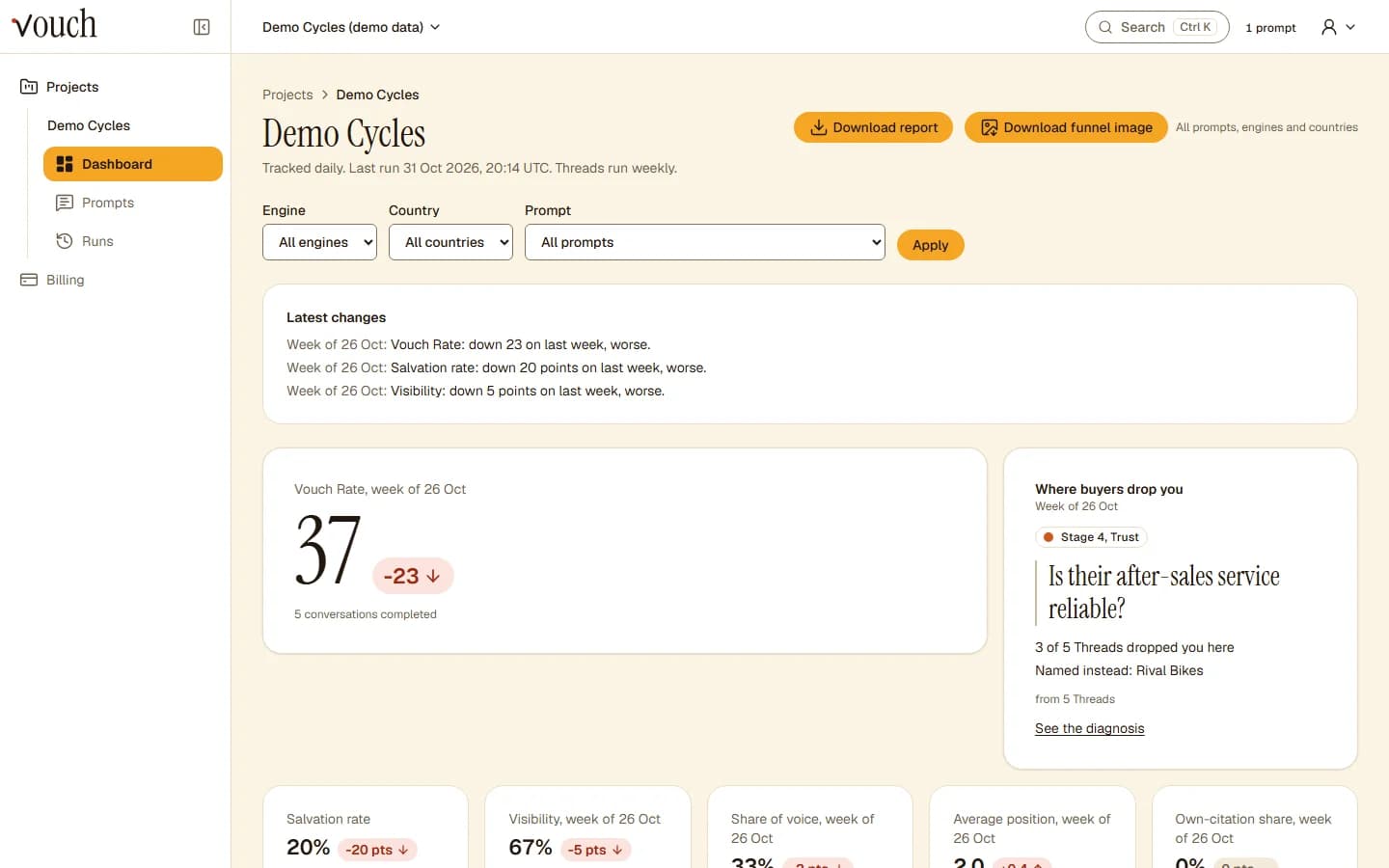
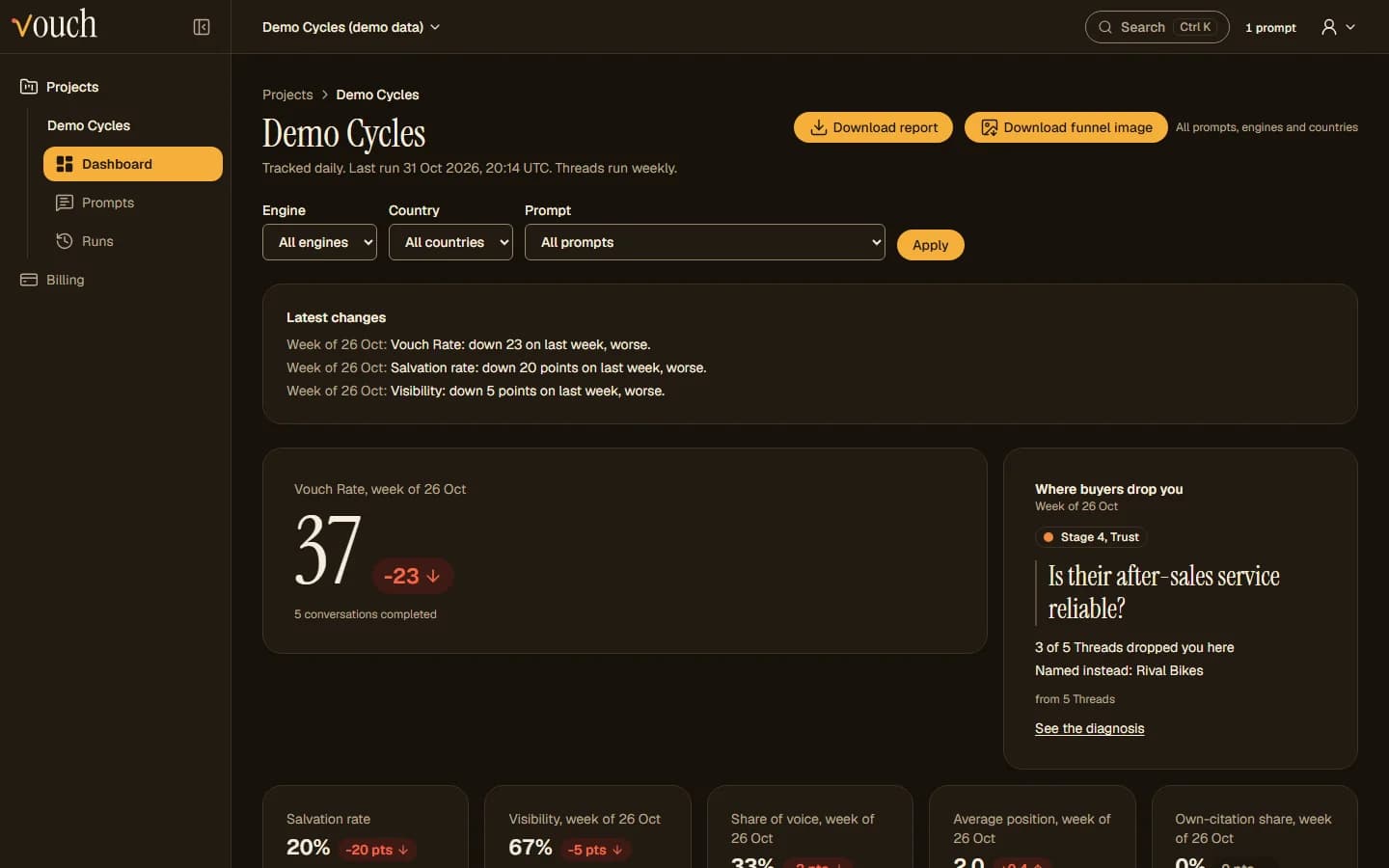
Vouch asks the questions your guests ask, every day, across seven AI assistants, in each country you track. Its Threads follow a stay from the first question to "where should we book?" in six steps, three times a week on ChatGPT, Claude, Gemini and Perplexity. Each one shows the step where your property drops out, the hotel or booking site named instead and the sources cited at that point, with a suggestion of what to publish. The methodology explains how each assistant is asked and how the weekly Vouch Rate is scored.
Common questions
How do travellers use AI assistants to choose a hotel?
Many describe the trip in plain language, get a shortlist of named places to stay with reasons, then ask about location, cancellation terms and the total price before deciding where to book.
Why would an assistant send a guest to a booking site instead of our own website?
Often because the booking site states prices, policies and reviews more clearly than the hotel's own pages. If your site hides rates or buries the cancellation policy, the assistant has less reason to point guests to it.
Do reviews matter for AI hotel recommendations?
They are one of the main sources an assistant can draw on when asked what guests think. Recent reviews that mention specifics give it more to say than an average score.
Can Vouch track more than one country?
Yes. Each plan includes a number of countries: one on Starter, two on Growth, three on Pro and ten on Agency. Answers are collected for each tracked prompt in each country.