
ChatGPT ads: what OpenAI's ad platform means for brands
By Vouch7 min read
ChatGPT is now an advertising channel. OpenAI says more than 100,000 advertisers have run campaigns on ChatGPT since the platform launched, and ads are now available in 89 countries, as of October 2026. For brands, this changes the shape of AI visibility: ChatGPT answers now have a paid layer and an organic layer, and you need a plan for each.
This guide covers what launched, how ChatGPT ads work, what advertisers can measure, and what the paid layer does and does not change about earning a place in the answer itself.
What launched, and when
OpenAI moved from announcement to global platform in nine months:
| Date | Milestone |
|---|---|
| 16 January 2026 | OpenAI publishes its ads principles and announces plans to test ads in the US on the Free and Go tiers |
| 9 February 2026 | US testing begins for logged-in adults on Free and Go, per OpenAI's testing announcement |
| 26 March 2026 | Pilot expands to Canada, Australia and New Zealand |
| 7 May 2026 | Expansion announced for the United Kingdom, Mexico, Brazil, Japan and South Korea |
| 11 August 2026 | Ads launch in those five markets |
| 5 October 2026 | New visual ad format and expanded measurement announced |
| 21 October 2026 | ChatGPT Ads expands to 26 more countries, reaching 89 in total, with over 100,000 advertisers to date, per OpenAI's expansion announcement |
OpenAI says 1.2 billion people use ChatGPT each week, as of October 2026. Ads appear only on the Free and Go plans; Plus, Pro, Business, Enterprise and Education subscriptions remain ad-free.
How ChatGPT ads work
The mechanics, as OpenAI describes them:
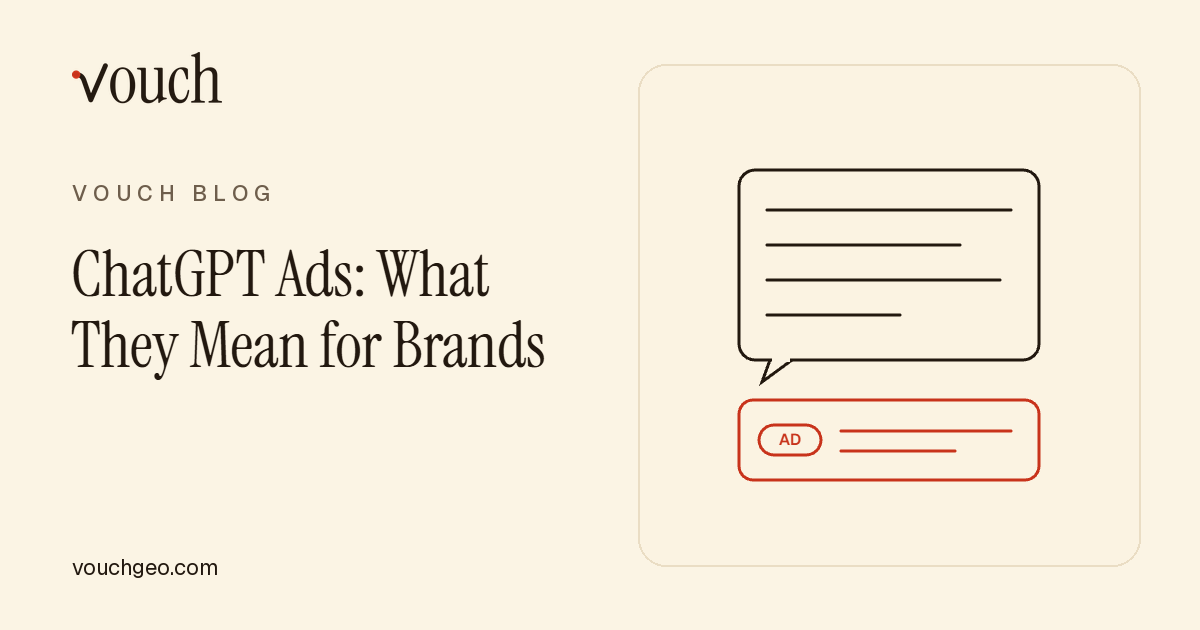
- Placement: ads appear at the bottom of an answer when a relevant sponsored product or service matches the conversation. A visual format, tested during image generation in the US from October 2026, adds image-led placements.
- Labelling: ads are clearly marked as sponsored and visually separated from the organic answer.
- Matching: OpenAI selects ads based on the topic of the current conversation, past chats and past interactions with ads. Advertisers never see conversations, chat history, memories or personal details; they receive aggregate performance data such as views and clicks.
- Exclusions: no ads for users OpenAI believes are under 18, and no ads near sensitive or regulated topics such as health, mental health or politics.
- User control: people can dismiss ads, turn off personalisation and clear ad data. Free-tier users can opt out of ads in exchange for fewer daily messages, and paid tiers are ad-free.
Advertisers buy through a self-service Ads Manager or technology partners, per the October expansion announcement, with sign-up at ads.openai.com.
What ads do not change: the organic answer
OpenAI's stated answer-independence principle is that ads do not influence the answers ChatGPT gives, and that answers are optimised for helpfulness, with sponsored content always separate and labelled. That is OpenAI's commitment, and the industry will hold it to that promise, but the practical takeaway for brands is the same either way: the organic answer remains an earned channel.
So ChatGPT now mirrors classic search, with a paid layer beside an organic one. Buying ads does not buy the answer, and skipping ads does not lock you out of it. The organic work, earning citations and recommendations in the answer itself, continues to matter, and it is where buyer trust concentrates. Our guide to how ChatGPT Shopping chooses brands covers the organic side of the product conversation.
What advertisers can measure
Reporting starts with aggregate views and clicks, per OpenAI's testing announcement. The October 2026 measurement update added:
- Conversion data integrations with Hightouch, Tealium and LiveRamp.
- Attribution partners including AppsFlyer, Triple Whale, Adjust, Rockerbox, Northbeam, Branch, Singular, Kochava, Airbridge and Tenjin.
- Incrementality measurement in early stages, with Haus, Measured and WorkMagic exploring geo-based experiments.
- Brand suitability pilots with DoubleVerify and Integral Ad Science, plus Negative Phrases for qualifying advertisers with narrow placement requirements.
OpenAI also published early partner findings: WeightWatchers' attributed cost per acquisition came in 15.3 per cent lower than its blended paid-search benchmark, according to DV Rockerbox; WorkMagic reported 67 per cent of incremental purchases for wellness brand Dose came from net-new customers; and Triple Whale reported 93 per cent of Portland Leather's visitors from ChatGPT Ads were new, all as of October 2026. Treat these as vendor-published early results from selected advertisers, not typical outcomes.
Should your brand advertise in ChatGPT?
This is an editorial judgement, not a rule, and budgets differ. Three profiles stand out:
- Consumer brands in conversational categories have the clearest fit. OpenAI's own examples centre on moments of active consideration: someone comparing meal kits, planning a trip or choosing running shoes. If your buyers research out loud, the placement exists where the research happens.
- Small and local businesses are a stated focus of the platform, per OpenAI's expansion announcement, because conversational discovery can surface options a buyer would never have searched for by name.
- Brands in regulated or sensitive categories should read the exclusions first: ads are not eligible near health, mental health or political topics, which rules out many placements entire sectors would want.
For everyone else, the October measurement additions matter more than the launch headline. A channel with Conversions API support and named attribution partners is one you can test with a capped budget and judge on your own numbers, rather than on early case studies from selected advertisers.
What this means for your AI visibility strategy
This is an editorial recommendation rather than a rule: treat paid and organic in ChatGPT as two programmes with one scoreboard. Run ads where they pay back, and keep building the organic presence that shapes the answers themselves. Four habits matter more now:
- Keep the organic baseline honest. Track whether ChatGPT names, cites and recommends you on the questions buyers ask, with repeated runs rather than one-off checks, because answers vary run to run. Our guide to AI search visibility covers the metrics, and tracking brand mentions in AI covers the method.
- Separate the two records. A sponsored placement and an organic citation are different events with different value; never let a campaign report blur them.
- Watch the answer, not just the ad. If buyers ask ChatGPT to compare you with a rival, the organic answer they read next carries more weight than any placement below it.
- Keep your site readable by AI. Organic citations still depend on crawler access, so confirm the bots can reach your pages with the free AI crawler checker.
How Vouch helps
Vouch measures the organic layer: how ChatGPT and six other engines recommend your brand across a whole buying conversation. Single prompts run daily across ChatGPT, Claude, Gemini, Perplexity, Google AI Overviews, Google AI Mode and Copilot. Threads, six-question buyer conversations run on ChatGPT, Claude, Gemini and Perplexity, show where your brand drops out between the first answer and the final recommendation, and the Vouch Rate, from 0 to 100, rolls stage survival and final choice into one number.
That gives you the organic record beside whatever your paid campaigns report. Plans start at $29 a month with a 14-day trial, and sign-up is invite-only through the Vouch waitlist, as of November 2026.