
How Perplexity Chooses Which Brands to Cite
By Vouch3 min read
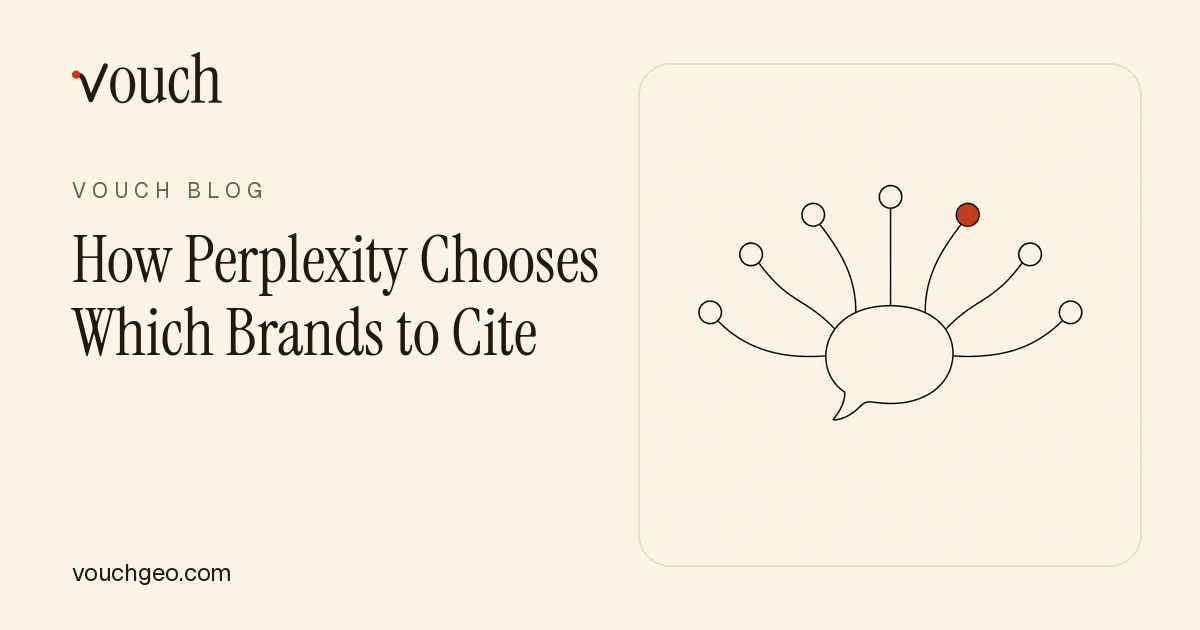
Perplexity is the most search-native of the AI assistants. Answers are grounded in live retrieval and typically carry numbered citations. For brands, that makes it the most transparent assistant to optimize for, and the most revealing to watch.
What the data says about Perplexity's sources
Analysis of over 100,000 Perplexity answers collected through Profound between July and October 2026 shows two patterns that should shape your strategy:
- Perplexity cites about 9.7 sources per answer on buying questions, the highest of the six assistants in that dataset. It does not pick one winner; it assembles a reading list.
- A third of those sources, 33.4 percent, are rankings and comparison pages. "Best X," "X vs Y," "top 10 X" articles are Perplexity's favorite raw material for buying queries.
Research from Yext adds a third pattern: Perplexity favors niche expertise. Where other assistants lean on big general sites, Perplexity reaches for industry-specific directories and specialist publications. In healthcare it cites Zocdoc; equivalent vertical directories matter in other categories.
What this means practically
1. Comparison coverage is the highest-leverage move. If the "best X" and "X vs Y" articles in your category do not include you, Perplexity has little to work with. Pitch the publishers, contribute the data, and publish your own honest comparisons. Yes, your own comparison page can be cited too, especially when it is specific and balanced rather than a sales page.
2. Get listed in the directories of your niche. Perplexity rewards the specialist sources. Identify the two or three directories or trade publications your category's buyers trust and make sure your listing is complete, current and reviewed.
3. Publish pages that answer one question completely. Perplexity lifts passages. A page that answers "is X worth it for Y" with a clear verdict, supporting numbers and a visible date gives it exactly what it needs.
4. Keep pages fresh and crawlable. Perplexity retrieves live. Stale prices, discontinued products and outdated claims get repeated back to buyers as fact. Check what it says about you monthly at minimum.
Mentions, citations and the follow-up problem
On Perplexity, a mention and a citation are different wins. Your brand can be named in the answer text while the numbered sources point elsewhere. Citations drive referral clicks; mentions drive the buyer's shortlist. You want both, and they come from different assets: citations from your citable pages, mentions from the broader web's coverage of you.
And Perplexity users ask follow-ups. The buyer who gets a shortlist will ask which one is reliable, which is worth the price, and where to buy it. Being cited in the first answer does not protect you in the fifth. Watch the whole conversation, not just the opening answer.
A quick self-audit
Ask Perplexity your five most valuable buying queries right now:
- Are you named? In what position?
- Are you cited, or only mentioned?
- Which sources does it use, and are you on them?
- Ask the follow-up: "which should I buy?" Who wins, and why does it say so?
That last answer is your content roadmap. The reasons Perplexity gives for recommending a rival tell you exactly which pages to publish and which coverage to pursue.
Vouch tracks your Perplexity mentions and citations daily, follows the six-question buying conversation, and shows you where you drop out. Join the waitlist: every invitation starts with a 14-day free trial.